


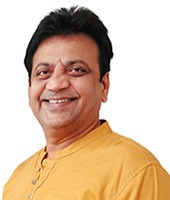
On 17 September 2025, Prime Minister Narendra Modi will turn 75. In Indian politics, this milestone is far more than a birthday—it is a symbolic turning point. The BJP has historically treated the age of 75 as a threshold. Senior leaders such as Lal Krishna Advani and Murli Manohar Joshi were moved to the Margdarshak Mandal (Advisory Council) once they crossed it. The looming question: will the same precedent apply to Narendra Modi?
The Precedent vs. Today’s Reality
The situation today is dramatically different. There is no second Modi inside the BJP. No other leader matches his stature, mass appeal, or political charisma. Attempting to push him aside at 75 would not only be unrealistic but also politically suicidal.
In modern Indian politics, very few leaders have enjoyed more than a decade of power without major anti-incumbency. Modi has broken that pattern. He has led the BJP to three consecutive victories—2014, 2019, and 2024—winning each on the sheer strength of his persona.
Despite unemployment, inflation, and concerns over institutions, voters once again handed him a resounding mandate in 2024, effectively endorsing his leadership until 2029. That mandate raises the obvious question: why would the BJP or the RSS risk sidelining the very man who remains their strongest vote-winner?
RSS, Gadkari, and the Succession Chatter
Much of the speculation comes from the uneasy but enduring relationship between the BJP and its ideological parent, the RSS. At times, the RSS has nudged its own choices forward. Recently, the buzz has been about Nitin Gadkari—praised widely for his achievements in infrastructure and highways.
Yet, popularity inside Lutyens’ Delhi and actual mass appeal are two different things. Gadkari is respected as an efficient minister, but he lacks Modi’s nationwide magnetism. For the BJP to project Gadkari—or anyone else—as Modi’s replacement would be a leap too far.
The Opposition Vacuum
Democracy thrives on both government and opposition. Yet today, the opposition in India is fragmented. The Congress continues its decline, while the INDIA alliance has struggled to maintain unity. With no credible challenger in sight, Modi stands stronger than ever.
This is why chatter on social media—fueled by some journalists and dissenting voices—that Modi should be “retired” to the Margdarshak Mandal has barely touched the public imagination.
Age Is Just a Number—Global Lessons
Critics argue that 75 is too old for active politics. But global politics tells a different story:
Donald Trump, at 78, is contesting elections in the US.
Vladimir Putin continues in power at 72.
In Iran, China, and Israel, leaders well past 75 remain at the helm.
The lesson is clear—age is no barrier when a leader retains both mass support and political control. Modi fits squarely into that category.
Tradition, Not Rule
It is also worth noting that the BJP constitution has no clause requiring leaders to step aside at 75. The Margdarshak Mandal is not a binding rule, only a convention applied selectively in the past. And in politics, conventions bend when circumstances demand.
The Real Question: Modi’s Legacy
The real debate is not whether Modi will be pushed into retirement in 2025—it is what path he charts for the future.
Will he lead the BJP into 2029 and aim for an unprecedented fourth term?
Or will he identify and groom a successor before stepping aside?
Can the BJP remain as dominant in a post-Modi era?
These questions will shape the party’s trajectory, but one thing is clear: Modi’s premature exit before 2029 looks improbable.
When Narendra Modi turns 75, political ripples are inevitable. Yet his stature, mass mandate, and the BJP’s dependence on his leadership make it nearly impossible for the party to relegate him to the Margdarshak Mandal.
There is no “second Modi” in the BJP. The opposition is fragmented. And the people have already entrusted him with the mandate until 2029.
For now, Modi remains the undisputed axis of Indian politics. The wishes of the RSS, the noise of the opposition, and the barbs of critics matter less than the verdict of the people—and the people, time and again, have chosen Narendra Modi.


