


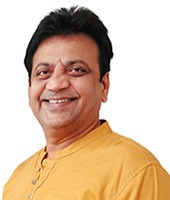
Politics in India has often been shaped by towering personalities who emerge from regional landscapes and go on to leave a national imprint. In the last decade, Gujarat has continued to prove itself as a cradle of such leadership. Names like Narendra Modi and Amit Shah stand today as defining forces of Indian political culture. Now, many political observers argue that another young leader from the state is gradually rising on a similar trajectory — Harsh Sanghvi, the dynamic Deputy Chief Minister of Gujarat, whose swift ascent, sharp organisational skills, and mass connect have placed him firmly under the national spotlight.
A Startlingly Fast Rise
Political growth at that speed is not possible without capability. Those aware of internal party functioning often point out that Sanghvi is among the few young leaders trusted with serious decision-making — not just symbolic participation. His rapid rise indicates the confidence the leadership has reposed in him and the broad acceptance he enjoys within the party ranks.
A Strong Equation With Modi and Shah
Politics is about alliances, trust, and ideological compatibility. Harsh Sanghvi’s strong rapport with Prime Minister Narendra Modi and Union Home Minister Amit Shah has been frequently noted by political analysts. This equation is not mere public imagery; it is rooted in shared visions for governance and organisational excellence.
Modi, known for promoting leaders with merit and self-drive, has been appreciative of Sanghvi’s hands-on approach to governance, particularly his early tracking of emerging problems and quick response systems. Meanwhile, Amit Shah — the architect of BJP’s expansion — is believed to value Sanghvi’s organisational sharpness and his ability to mobilise support effectively.
This support from the highest levels of leadership does not indicate dependency but rather synergy. It suggests that Sanghvi embodies the qualities the party sees as essential for future leadership: discipline, delivery, and mass acceptance.
Media Friendly Without Being Controversial
In the era of hyper-active media, many politicians either remain invisible or become headline-hungry. Harsh Sanghvi has mastered the middle path. He engages with the media with accessibility and warmth, yet does not indulge in controversy-driven publicity. Journalists, reporters, and editors across platforms have recognised Sanghvi as someone who understands the value of communication.
He represents a new-age political style where the narrative is shaped not through confrontation but through presence, clarity, and relatability. Whether addressing sensitive issues, sharing policy updates, or participating in public campaigns, his communication remains composed and constructive.
This is an important political skill. A leader who can hold the attention of the press without being the centre of controversy earns public faith — a currency that becomes invaluable during electoral cycles.
A Key Organisational Asset and Fund-Raiser
Politics requires resources — not just for elections but for building a continuous presence among the people. Harsh Sanghvi has emerged as one of the most effective fund-raisers for the BJP in Gujarat. The reason is not merely his ability to connect with the business community but the credibility he carries: donors believe that funds channelled through Sanghvi are used transparently and strategically.
Fund-raising, in reality, is also a reflection of perception. Only those seen as trustworthy, influential, and dependable become successful at it. Sanghvi’s proficiency here signals that he enjoys significant goodwill beyond the political world — in the corporate sector, the social space, and among professionals. For any party aiming for long-term structural power, leaders like him are indispensable.
A Bridge Between Youth and Governance
Harsh Sanghvi represents a generational shift in Indian governance. His image is not of a detached or unreachable neta but of a relatable young leader who speaks the language of ambition, opportunities, and modern aspirations. His initiatives and public interactions show sensitivity toward:
Youth development and employment
Entrepreneurship and start-ups
Skill development
Public safety and civic responsibility
Sports and lifestyle reforms
Indian politics needs leaders who can resonate with a young nation without compromising on discipline. Sanghvi fits that category. He links the aspirations of the 18–35 age group with governance — a demographic that will dominate Indian elections for decades.
Gujarat Today, India Tomorrow?
Political observers have started reading the signs. Many believe Sanghvi represents the next chapter of Gujarat’s contribution to Indian leadership. They see in him not just a future Chief Minister of Gujarat but also a potential national leader over the next decade.
Why such confidence?
Administrative capability demonstrated at a young age
Proven electoral and organisational performance
A clean, controversy-free image
Media connect and communication excellence
Alignment with BJP’s long-term national ideology and narrative
Deep trust from central leadership
At a time when the BJP is searching for its next tier of national leaders who can sustain the party beyond its current giants, Sanghvi represents a promising option — youthful, efficient, and politically mature.
The Road Ahead
The future of Harsh Sanghvi will be shaped by how effectively he maintains his balance between governance and politics. The next few years will be crucial:
Delivering strong administrative outcomes in Gujarat
Cultivating wider recognition beyond the state
Maintaining a clean public image despite rising national spotlight
Strengthening grassroots party connections
If he continues on his current path, his rise appears not just possible but natural.
A Leadership Style That Reflects Public Mood
Harsh Sanghvi’s political personality resonates with the demands of today’s India — youthfulness with seriousness, confidence without arrogance, and accessibility without theatrical populism. He speaks of nationalism without aggression, development without rhetoric, and governance without detachment. In an era where voters are increasingly aspirational and impatient, his style fits the psychological demand of modern Indian democracy.
The political journey of Harsh Sanghvi is not merely a success story of a young leader; it is a reflection of how Indian democracy is evolving. His ascent signals that age is no longer a barrier — performance is. His acceptance within the party shows that leadership is earned, not inherited. His growing image in the media and among the public reflects the hunger for relatable yet grounded leadership.
Today, he stands as an important political force in Gujarat. Tomorrow, he could stand as an important political force for India.
If Gujarat once gave the nation leaders who changed the political landscape forever, Harsh Sanghvi may well be preparing to carry that legacy forward — as a leader not only for the state, but potentially for the nation.


