


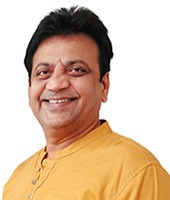
On the threshold of completing one year as Chief Minister of Odisha, Mohan CharanMajhi stands as a symbol of humility, perseverance, and inclusive governance. Hailing from the tribal-dominated Keonjhar district and belonging to the Santhal community, Majhi’s rise to the top political post in the state is historic—not only because he is the first tribal CM of Odisha, but also because he has been able to bring a refreshing sense of simplicity and grounded leadership to an office often dominated by bureaucracy and aloofness. The ruling BJP is set to complete one year of the government under the leadership of Mohan CharanMajhi on June 12, for which it has planned a grand three-day celebration from June 11 to 13, from block to state level. ShriMajhi has invited the Prime Minister and Home Minister to grace the occasion.

In a state that has seen over two decades of Naveen Patnaik’s leadership, the ascent of Majhirepresents a new era. His style may be different, his background perhaps humbler, but in just one year, Mohan CharanMajhi has demonstrated that simplicity is not a weakness—but a powerful strength. It builds trust, ensures accountability, and connects the government to the grassroots.
A Grassroots Leader with Deep Roots in the Soil
Mohan CharanMajhi’s political career did not begin with luxury or privilege. Born in a modest tribal family, he was raised amidst the daily struggles of rural Odisha. A former teacher by profession, Majhi has always maintained a strong connection with the people, especially the marginalized and tribal communities of the state. He began his political journey with student activism and later became associated with the BharatiyaJanata Party (BJP), where he gradually earned respect as a sincere and committed worker.
Over the years, he served as a Member of the Odisha Legislative Assembly from Keonjhar, earning a reputation for being accessible, honest, and hardworking. He was never seen as a typical politician—instead, he was one with the people, often spotted at community events, public service initiatives, and tribal gatherings. This natural connect with the masses would later become a defining strength of his chief ministership.
Historic Moment: First Tribal CM of Odisha
When Mohan CharanMajhi took oath as the Chief Minister of Odisha in 2024, it was not just a political development—it was a moment of pride and emotional resonance for the 22% tribal population of the state. For the Santhal, Munda, Kondh, and many other indigenous communities, Majhi’s appointment was a symbol of long-overdue representation.
But the significance extended beyond symbolic value. It was also a commitment to inclusive development—to bring the voices of the most neglected communities into the mainstream policy framework. Within his first year, CM Majhi has ensured that tribal issues have taken center stage in the state’s development agenda—be it education, health, land rights, or livelihood opportunities.
Governance Rooted in Simplicity and Integrity
What sets Mohan CharanMajhi apart from many of his predecessors and contemporaries is his simplicity in governance. Unlike the grand, high-security entourages often seen with political leaders, CM Majhi has been frequently spotted interacting directly with villagers, visiting Anganwadicenters unannounced, and inspecting public hospitals and schools without prior intimation.
He has often said, “My job is to serve the people, not to rule over them.” This humility reflects in his governance style—transparent, people-oriented, and highly responsive.
His office has streamlined grievance redressal systems, introduced digital portals for public welfare schemes, and enhanced RTI (Right to Information) mechanisms. These steps may not make headlines every day, but they are quietly transforming the citizen-government relationship in Odisha.
People’s CM: Winning Hearts Across Communities
While Majhi is the first tribal CM, he has made it clear that he is the Chief Minister for all Odias, not just tribal communities. His inclusive approach has won him appreciation across castes, religions, and regions. In his first year, he has personally visited every district of the state, making direct connections with farmers, students, women’s self-help groups, and senior citizens.
Under his leadership, several flagship welfare programs have been scaled up:
- “Mission SwasthyaOdisha” to improve healthcare access in rural and tribal regions, including mobile health clinics and telemedicine.
- “KrishiPragatiYojana” for supporting small and marginal farmers with better irrigation, organic farming incentives, and market linkages.
- “Siksha Shakti Abhiyan”, aiming to reduce dropout rates in tribal areas by improving school infrastructure and introducing tribal language-based education in early grades.
- “OdishaYuva Shakti” for skill development and job readiness of rural youth.
These programs are built not just with policy documents but with field-level engagement, ensuring implementation is monitored and beneficiaries are actually reached.
Rebalancing the Urban-Rural Divide
A critical achievement in CM Majhi’s tenure has been his effort to bridge the urban-rural development gap. Recognizing that Odisha’s future lies in the balanced growth of all its regions, the state government has launched integrated area development plans.
Majhi’s government has prioritized rural road connectivity, electrification of tribal hamlets, and strengthening of Gram Panchayats. At the same time, urban infrastructure in Bhubaneswar, Cuttack, Rourkela, and Berhampur is being modernized with smart city features, enhanced public transport, and waste management systems.
A Cultural Custodian: Promoting Tribal and Odia Heritage
Culturally conscious and rooted in tradition, CM Mohan CharanMajhi has been a strong promoter of Odisha’s tribal heritage, language, and folklore. His government has initiated programs to revive tribal art forms, safeguard tribal languages like Ho, Santali, Kui, and Saora, and document indigenous knowledge systems.
Festivals like NuaKhai, Karam, and ChhauUtsav have received state-level support and visibility under his leadership. Museums and tribal cultural centers are being expanded in districts like Koraput, Mayurbhanj, and Sundargarh.
In addition, he has strongly advocated for classical Odia literature and Jagannath culture, reinforcing Odisha’s identity while embracing diversity.
Environment and Livelihood: Striking a Balance
Understanding the sensitive ecology of Odisha—particularly its forests, coastline, and tribal-inhabited zones—Majhi’s government has emphasized sustainable development. Environmental clearances are being re-evaluated with community participation.
In tribal areas, forest rights under FRA 2006 are being fast-tracked, and forest-based livelihoods like lac cultivation, sal leaf products, and minor forest produce (MFP) are being supported through cooperatives and market linkages
Political Decency in the Age of Rhetoric
In an era often marked by polarization and harsh rhetoric, Mohan CharanMajhi has maintained a tone of political decency and respect—even toward opponents. Whether responding to criticism in the assembly or addressing the media, he keeps the discourse civil.
This approach has improved the functioning of the state legislature and created an atmosphere of collaborative governance, with opposition parties acknowledging the CM’s respectful conduct.
Challenges Ahead and the Road Forward
While his first year has been largely successful, the road ahead is not without challenges. Odisha faces significant issues such as:
- High migration from tribal areas.
- Natural disasters like cyclones and floods.
- Malnutrition in tribal children.
- Need for greater industrialization without displacing vulnerable populations.
CM Majhi’s strength lies in his listening approach. He has already launched district consultation committees, inviting local stakeholders to design tailored development plans.
As the state prepares for major investments in mining, tourism, and education, maintaining the delicate balance between development and displacement will be a test of leadership. But if the first year is any indication, Majhi is prepared to face these challenges with quiet resolve and a people-first attitude.
The Strength of Humility in Power
Mohan CharanMajhi’s first year as Chief Minister is a lesson in how humility, integrity, and grassroots engagement can reshape governance. Far from being a weak approach, simplicity has emerged as his biggest strength—earning the trust of people across communities.
He has shown that a leader need not be distant to be dignified. He has demonstrated that development can be compassionate, that policy can be people-centric, and that tribal leadership is not just possible—it is powerful and transformative.
As Odisha moves ahead under his stewardship, Mohan CharanMajhi is not just leading a government—he is shaping a more inclusive, empathetic, and empowered Odisha.


